

In the industrial coating industry, the difference between a project lasting 2 years or 20 years often comes down to a few microns. If the coating is too thin, protection fails; if it’s too thick, you risk cracking and wasting money. At PZSSS, we believe Quality Control (QC) is non-negotiable. Here is how to correctly perform Dry Film Thickness (DFT) testing.

1. The Difference Between WFT and DFT
- Wet Film Thickness (WFT): Measured immediately after the paint is applied. It helps the painter adjust the spray gun in real-time.
- Dry Film Thickness (DFT): The final thickness after the coating has fully cured. This is the official measurement for project warranty and compliance.
2. The Tools of the Trade
- Comb Gauges: Used for measuring WFT. The painter simply presses the comb into the wet paint and reads the highest wetted tooth.
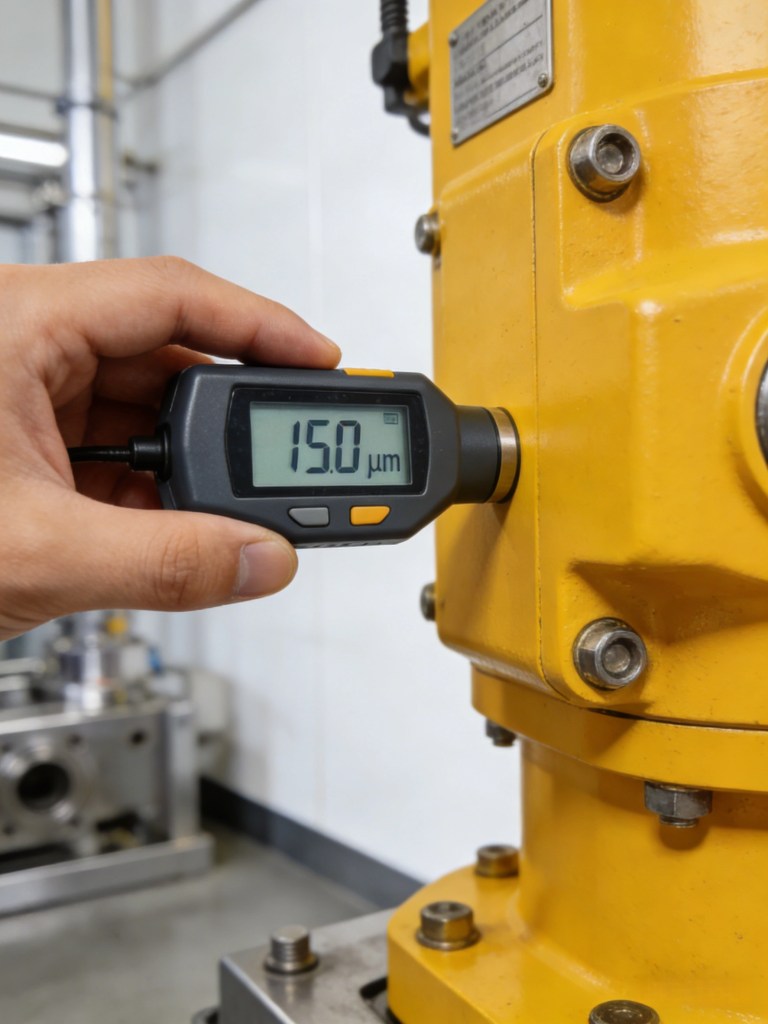
- Digital DFT Meters: These high-precision instruments use magnetic induction or eddy currents to measure the distance between the probe and the metal substrate. Always use a calibrated PZSSS-approved meter for accuracy.
3. The “90/10 Rule” for Acceptance Professional standards (like SSPC or ISO 12944) don’t expect every single point to be perfect. The common industry rule is:
- 90% of all measurement points must be at or above the specified thickness.
- The remaining 10% must not be less than 80% of the specified thickness. Following this rule ensures structural safety without unnecessary repainting.
4. Proper Measurement Technique Do not rely on a single reading. To get an accurate average:
- Take at least 3 to 5 readings in a small area (the size of a coin).
- Repeat this process at multiple spots across the entire structure.
- Avoid measuring near edges or bolts where paint naturally pools or thins out.


You must be logged in to post a comment.